
Personal Injury Lawyers in the Midwest

Personal injury cases across the Midwest and South Central U.S. don’t follow a single set of rules. An injured driver in Texas faces different deadlines and fault rules than one in Missouri, Kansas, or Iowa. Insurance requirements vary. Courts operate differently. What counts as a strong case in one state can be a weaker position in another.
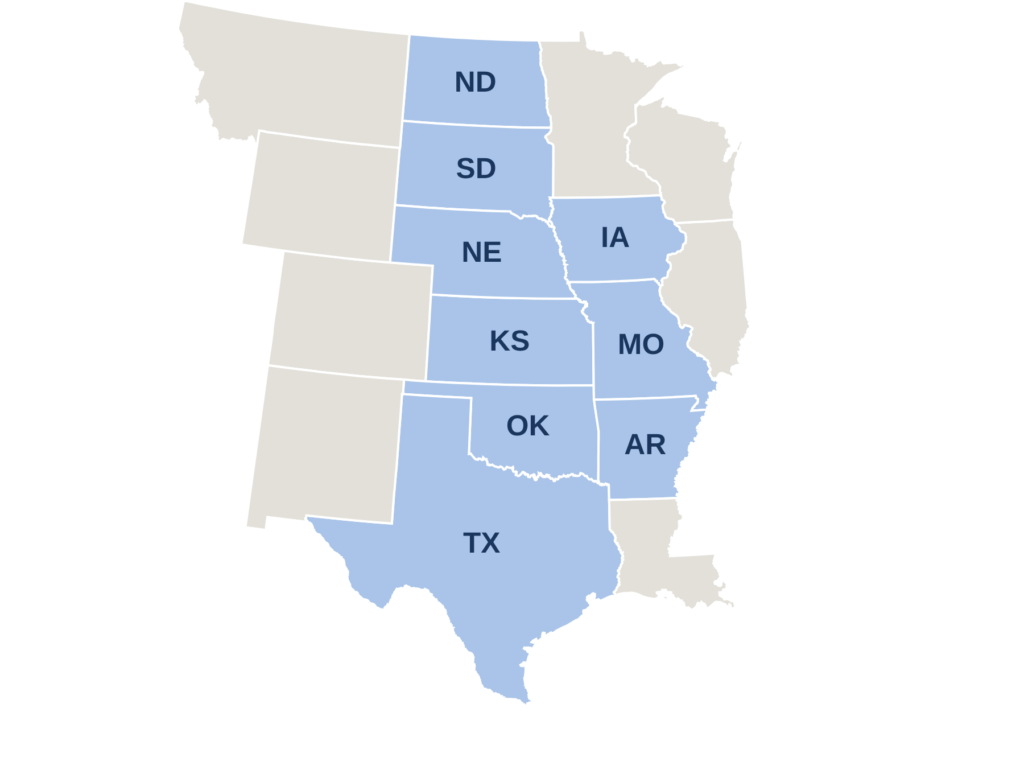
This network connects injured people across the region — from the Dakota plains through Nebraska and Kansas, into Iowa and Missouri, and down through the Texas panhandle, hill country, and Gulf coast — with local personal injury attorneys licensed in their specific state. Attorney participation in this network is voluntary. They handle their own cases, set their own fee structures, and maintain their own client relationships. We do not represent clients and we are not involved in the legal work or outcome of any case. Our only role is to connect injured people with attorneys who can actually help them.
Case reviews are free. There is no cost, no obligation, and no commitment to hire anyone. You decide whether to move forward after speaking with an attorney — or not.
Cities We Cover in the Midwest & South Central U.S.
Iowa
Des Moines
Cedar Rapids
Davenport
Missouri
Springfield
Columbia
Independence
St. Joseph
Joplin
North Dakota
South Dakota
Arkansas
Texas
Amarillo
Lubbock
Midland
Odessa
Abilene
Waco
Brownsville
McAllen
Killeen
Beaumont
Tyler
Corpus Christi
Laredo
College Station
Wichita Falls
San Angelo
Why Local Matters for Personal Injury Cases
While laws vary and depend on the specific facts of a case, state law across this region differs more than many people realize. Missouri generally follows comparative fault rules under which an injured person’s recovery may be reduced by their share of fault but is not automatically barred simply because they were partly responsible. Kansas, Nebraska, North Dakota, Iowa, and Texas generally use modified comparative fault frameworks that can bar recovery once a claimant’s share of fault reaches or crosses the applicable threshold. South Dakota applies its own distinct comparative fault framework. Statutes of limitations also differ across the region, and a missed deadline can end a case permanently.
Note: Laws vary by state, and the information on this page is general only. You should speak with a licensed attorney in your state about how the law may apply to your specific situation.
Licensing matters. An attorney licensed in California cannot file a case in Arizona, even if the accident happened two miles from the state line. Attorneys who practice across multiple states maintain licenses in each, or they refer cases to local counsel. Working with an attorney actually licensed where the injury occurred avoids delays and jurisdictional mistakes.
Local familiarity is a practical advantage. Attorneys who practice regularly in local courts know how individual judges handle motions, which insurance adjusters tend to negotiate versus go to trial, and how local juries typically assess damages. An out-of-state attorney working from a playbook written for a different jurisdiction is at a real disadvantage compared to someone who handles cases in the local courthouse every week. Participating attorneys must practice in the areas they agree to serve.
How This Service Works
1. Submit a request for a case review
2. Your request may be routed to a local attorney
3. You decide whether to move forward